


R&B Exclusive (CRII E-Talk Series): “It Has Taken A Lot Of Effort To Attain A Healthy Relationship With IRDA!” Alok Bansal, Co-Founder, PolicyBazaar

PolicyBazaar is India’s leading and largest online insurance portal, with a close-to-monopoly online market presence across the nation. PolicyBazaar was the first mover in the Indian online insurance space and now offers policies in both the general and life insurance areas.
The Gurugram-based PolicyBazaar, started in June 2008, now has close to 2000 employees across India and has already started diversifying into related fields, like offering investment options for the retail community. Param Khanna from CRII’s Retail & Business met up with Alok Bansal, Co-Founder, PolicyBazaar as a part of the CRII E-Talk Series. Presented here are some interesting excerpts from the interview…
RETAIL & BUSINESS (R&B): How has your journey been from 2008 till now?
ALOK BANSAL (AK): We started in June 2008. At that time, there were three of us – Yashish [Dahiya] was the CEO, Avaneesh [Nirjar] was the COO and I was the CFO. At that time, we had a small team of 12 who were the co-founders. The business model has evolved over time; the team has grown and the responsibilities have also changed. So, over time, I started looking into more areas like strategy. Eventually, when Avaneesh moved out couple of years back, Yashish and I unofficially divided the roles between ourselves in such a way that in some cases he took the lead, in some cases I took the lead, and in some cases we jointly took care of the issue depending on our own mindset. Sometimes, I become more process and control-oriented because that’s the way I am wired. So, I look at whether we are putting an institution around this or a process around this. We have actually never sat down to define our roles; it all just used to happen automatically. I started off only as a CFO, but now, I also take care of other areas including HR and admin. Yashish, on the other hand, takes care of marketing, PR, product (which is the website for us) and all sorts of business development processes.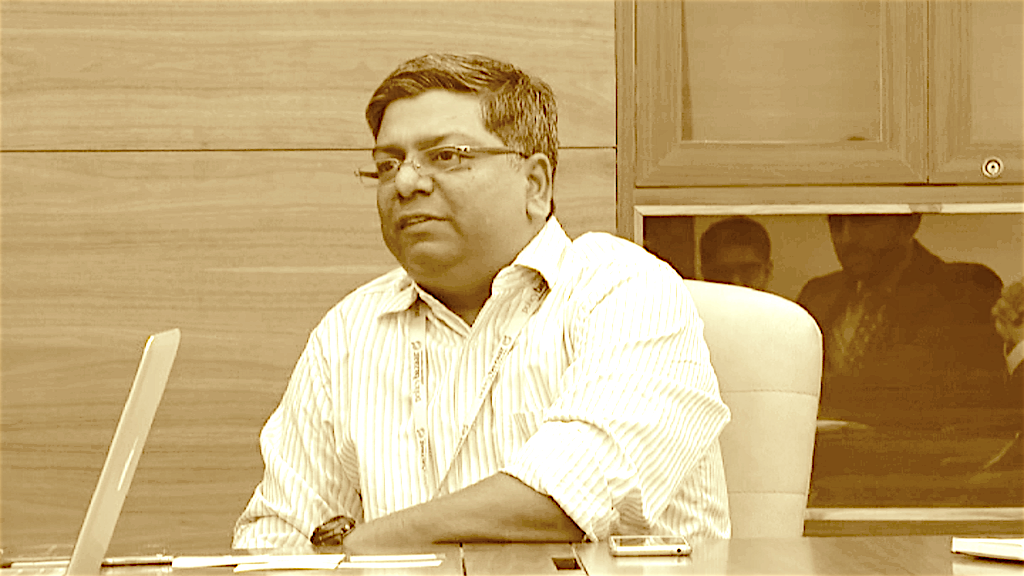
R&B: How did you think of PolicyBazaar.com?
AK: I was not one with the internet-background. In 2008, Yashish and I thought it would be right for us to look at insurance. At that time, Yashish also wanted to have a venture where he was in the driving seat. So we came out and started this. The idea was very similar to what was already happening in UK, where Yashish had worked earlier, although the way it shaped up was very different. One of the basic things we realised very soon was that motor insurance was not going to give us the scale that we wanted. So, we had to start looking at other verticals like health insurance and life insurance, which came with their own challenges. The second thing that we realised was that the insurance companies were heavily dependant on the agent and bank model, and for them direct access didn’t exist. Since it was not a focus area, the types of products they were creating were not focussed on customers but totally focussed on distributors. They were creating products just to distribute rather than thinking from the customer’s point of view. On top of that, even today, it is one of the main challenges that we face – not just the products, even their [the insurance companies’] platforms and processes are not aligned for online customers. That gave us some window for alternatives, although that also made us struggle a lot. The thing is that we never had any financial services or insurance background. So, it was very tough for us to break into those companies. But that was a good thing that happened because we didn’t have any idea of the traditional approach of doing things. Because of that, we came up with a lot of crazy ideas to face the challenges. The first few years were just about survival, as it was not very easy to conclude deals. When a customer logged in, we had to ensure the platform was perfect, the process had to be smooth and the payment gateway had to be perfect, and these were not happening during the initial years. As you know, insurance is very heavily regulated all over the world, and the same happened with us in India. When we started interacting with customers in 2010, they were clueless about the digital side of insurance. We had to spend a lot of time with them to make them go through our business model, our values, our ethics and make them understand exactly what we were trying to do. Since the last five years, we have had a very healthy relationship with IRDA, but it has taken us a lot of effort to attain the same. Worldwide, aggregators are looked at as marketing-entities; but in India, they are looked at as distribution-entities. And there are restrictions placed on aggregators both commercially and editorially. So we cannot have a few things on our website, even though that may look very obvious in a digital world. Commercially what we can earn is also restricted. But the business has evolved significantly now. The first problem that we are trying to solve is saving the customer’s corner; we are also trying to get into this whole value chain of insurance and trying to fix the areas which need to be fixed.
R&B: So why do customers choose you over a regular standalone insurance agent?
AK: The first thing is, for a customer, it’s not very easy to find all the insurance product options that are available without doing much legwork if we are not there. It is not just about the pricing, but also about the features – what is included and excluded in any policy – and a lot of other complicated issues that we clarify. The amount of talk that the customer has with our team before they conclude a transaction is not trivial at all. For example, if the conversation is regarding health insurance, then I can bet that the conversation would be for at least two hours on an average. And that would be just to make the customers understand what they are actually buying. Now, the second part is that unless agents have very high ethics, they always tend to promote insurance policies that are beneficial for themselves and not necessarily so for the customer. If an insurance company is giving 30% as commission and another insurance company is giving 32% as commission, then the agent will push the policies of the company giving 32%. I can give a lot many examples, but eventually, the agent will issue an insurance policy in which he, himself attains the maximum benefit. Insurance is nothing but a promise and the customer actually wants to get the claim whenever the need arises. In India, mostly, when the agent comes with the form, he just asks the customer to fill a particular area in the form and suggests that he will fill out the rest of the details on behalf of the customer. For example, if according to my height, the appropriate weight should be 65 kg for a proper health insurance policy. But if I actually weigh 80 kg and my agent falsely mentions 65 kg in the form, then the quality of business going to the insurance companies is totally different. To address these and similar issues, the teams at PolicyBazaar work day and night to ensure that the customer is completely aware of what he is actually buying and how beneficial it is actually going to be for him. And with respect to the claiming process, the agent does not anyway have that much control over the claiming process, because claims are handled directly by the insurance companies. Agents might be helpful for filling out the customers’ forms, but they won’t do much running around for you. For example again, if an individual is having a heart attack late at night, which agent is going to pick the customer’s call in the middle of the night and say “Okay, I am coming to help you out.” But, with an organisation like PolicyBazaar, those things are actually taken care of. We have a designated call centre, we have particular tools, which completely help the customers to go through the whole process very easily. In the PolicyBazaar app, the main focus is on services. If, as a customer, I am away from my home and I need some assistance for knowing all the hospitals near me which have cashless medical benefits, what do I do? In the app, your GPS location is tracked. With the options available, you are able to find all the hospitals within a 10km/20km/30km radius; and you can also easily avail of the ambulance service through the app. To top it all, you can even file a claim by just clicking on the option provided in the app, because all the customer information is stored on our servers, which makes it easy to file claims through the app. This adds most of the value because during an emergency, no one is able to think straight, leave apart trying to find a copy of the policy. If you get an app then makes your life simpler, then why would you choose anything else?
R&B: Are you using any big data or analytic tools?
AK: We don’t really need those at this point of time. The basic problem is not about having a big data setup but about the creation of hypothesis, and about how many people can create the right hypothesis. I come from a GE background and over there, we used to have the DMAC tool (Define a problem, Measure the problem, Analyse and then Control). How many companies do you think would be able to follow this? Defining the problem is itself a big task. It is a heavy process for most of the companies. Somewhere, I think such tools will help only when one understands what one is trying to achieve. I think there is still a very big gap with respect to this issue in most of the companies that exist today.
R&B: Is it true that most of the e-commerce companies in India are still not profitable? How about your company’s revenue and profit figures?
AK: You see, it all depends on what are your priorities. It totally depends on what you, the management and the board, collectively decide for the company. For a model like our’s, we have a cost structure, and we can easily double up any day when we want. It’s all about choice, as in, whether you want to choose to scale and grow today, or you want to focus on just profitability. Plus, your decisions are completely based on the current environment, the financial capability and a lot of other factors. Today, we at PolicyBazaar are focussing on spreading customer awareness and on building a robust platform, which require a lot of investment. We have got an excess of funds as we have just closed round D. We won’t be smart enough if, just for the sake of profitability, we just keep the funds in the bank without investing them in the growth of the company. We are focussing on the scale of growth in the company as the profitability is not too far away.
R&B: You had a Rs.75 crore revenue close in the past financial year; where do you see PolicyBazaar in 2016?
AK: I cannot be 100% sure because it is very difficult for us to predict anything beyond three months. If you ask for our targets, they may vary anywhere from Rs.120-130 crores. But there are a few things to be considered out here. Firstly, the mix of products… is it changing? And what does it mean in the long term for our business? Secondly, a lot of my revenues are from book building. At the same time, one has to also consider the quality of revenues. I have let go of some easy revenue available to me this year, which was part of revenues during the last year – like some lead-generation revenues – but since that quality of revenue wasn’t good statistically for the company, so we decided to just let it go.
 R&B: Google makes a significant amount of its revenues from lead-generation…
AK: Google somehow doesn’t make that much money in India. If you look at some key Google trends regarding insurance, majorly life insurance, then you would see that the overall value is going down. In that sense, PolicyBazaar has almost become ‘the’ insurance destination – 90% of my transactions happen with the people who haven’t come from any paid source because they come directly to PolicyBazaar.com; and 7% come from my brand’s keyword, so 97% is driven by my brand. In a recent study, PolicyBazaar came out to be the 2nd most trusted brand for insurance after LIC. The rate of customer complaints is 0.02%, whereas the customer appreciation mail rate is 0.5-0.8% on a daily basis. So, somewhere, customers have shown their trust in what we are trying to do. And if we sustain this in the long run, we would be very happy about it. There are two things that we continuously achieve, growth and customer satisfaction.
R&B: You have expanded your venture with PaisaBazaar. Yours is an organisation with limited resources… Isn’t there a fear of spreading your resources too thin?
AK: Actually, to be true, this brand extension was not by choice. This happened because we wanted to do something outside the insurance space, and also because we thought that there was some alignment with our existing business.
R&B: Insurance is a social service for the society. Yet, senior citizens don’t have much insurance protection as most of the insurance companies stop insuring individuals after the age of 75. With the rising life expectancies, you see many elderly people without insurance, which is one of the biggest reasons why their savings go away during ill-health. Are you looking at offering policies specifically for senior citizens?
AK: We can’t really create a product; and insurance companies still aren’t completely aware of how to price the risk in this space. Obviously, the risk is high and you can always price it, but since companies aren’t creating those products, we can’t really do much around it. If you take into consideration the urban areas, most of the houses won’t have people exceeding the age of 75; and even if there are, then they are not financially sound to opt for an insurance policy at that age. That’s why we tell people to get insured in life as quickly as possible because the benefits in certain policies get extended life-long as well. With the development all-around, the market too is evolving, where insurance companies are coming up with senior-citizen plans and many other beneficial plans.
(Copyright, President and Fellows of Confederation of Retail Industries of India; Retail & Business)




Leave a Reply
You must be logged in to post a comment.